
- Review
Rethinking Healthcare Policy for an Age of Disasters: Lessons from Fifteen Years of Crisis in Japan
April 14, 2026
|
KEY TAKEAWAYS |
1. Introduction
Fifteen years have passed since the Great East Japan Earthquake of March 2011. During this period, Japan has faced a series of disasters, including the 2016 Kumamoto earthquake, the 2018 West Japan floods, repeated typhoons and flooding, the 2024 Noto Peninsula earthquake, and the COVID-19 pandemic. Japan is one of the world's most disaster-prone countries, frequently affected by earthquakes, tsunamis, and heavy rains, while also being one of the most rapidly aging societies globally.
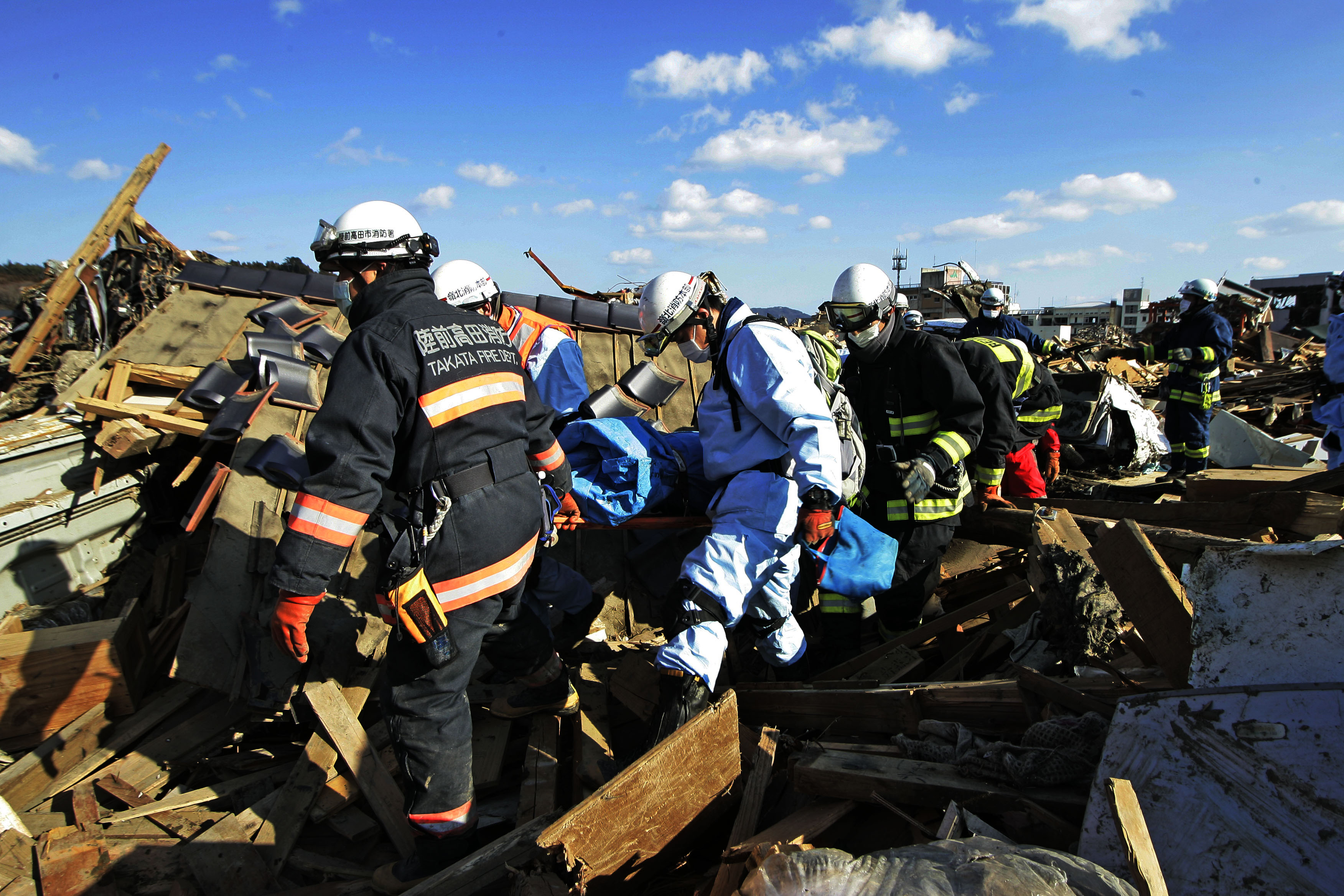
Given this reality, disasters should not be viewed as exceptional events outside the normal scope of policy planning. Healthcare systems must be designed for both efficiency during routine periods and resilience during crises. The central lesson of March 2011 was clear: healthcare stops. Power outages, water shortages, fuel scarcity, and disrupted transport links made hospitals and clinics non-functional when they were most needed.
This article examines the healthcare policy challenges shared by Japan's major disasters and argues for systematic, forward-looking preparedness.
2. Acute-Phase Vulnerabilities in Disaster Response
2.1 Infrastructure Collapse and Immediate Medical Challenges
Large earthquakes and flooding events not only cause casualties but also damage the infrastructure required for treatment. After the 2011 earthquake, 380 hospitals in Iwate, Miyagi, and Fukushima prefectures were damaged, which severely limited medical supply when demand increased. Utility failures and blocked roads disrupted the delivery of medicines and fuel. These constraints required a shift in medical practice: instead of focusing on optimal care for each patient, responders had to allocate limited resources to save as many lives as possible.
The response was a remarkable national mobilization by any measure. Disaster Medical Assistance Teams (DMAT), the Japanese Red Cross, Self-Defense Force medical units, and the Japan Medical Association's JMAT all deployed to affected areas. However, observers noted significant problems with coordination and command structures. The 2016 Kumamoto earthquake, which incorporated lessons from 2011, revealed new vulnerabilities, especially the inadequate seismic reinforcement of many regional hospitals. With both a Tokyo metropolitan earthquake and a potential Nankai Trough megaquake considered realistic near-term scenarios, the risk of acute medical system collapse remains significant.
2.2 Lessons from the COVID-19 Pandemic
The COVID-19 pandemic, although distinct from a natural disaster, revealed structural weaknesses in Japan's healthcare system that are directly relevant to disaster preparedness. Despite one of the highest hospital bed ratios per capita in the OECD, Japan's acute care system repeatedly struggled to accommodate patients during pandemic surges. At the peak of the Delta wave in summer 2021, only about 5% of Japan's approximately 900,000 acute care beds accepted COVID patients, compared to rates exceeding 20% in the United States.
The underlying problem was not a shortage of beds but rather a shortage of staff, clear coordination mechanisms, and information-sharing infrastructure. This distinction is crucial for policy because bed count does not accurately represent surge capacity. The main bottlenecks in acute crisis response are personnel deployment, real-time data sharing, and clear command structures.
The policy priorities are therefore clear. First, strengthening the functional capacity of designated disaster hospitals, including redundant power and communications systems. Second, expanding inter-regional patient transfer networks and medical coordination infrastructure. Third, redesigning peacetime workforce training and role allocation. Without reforming peacetime workforce training and role allocation, it will not be possible to increase surge capacity during major disasters or infectious disease outbreaks.
3. Post-Acute Care: Addressing Long-Term Health Impacts
3.1 Chronic Health Decline and Disaster-Related Mortality
A disaster response that ends with the immediate emergency is insufficient. The weeks and months after a major disaster bring increased mortality and health decline, especially among elderly individuals and those with chronic conditions. After the 2011 earthquake, prolonged displacement from the Fukushima nuclear disaster forced residents to remain in evacuation centers for extended periods. Serious secondary health crises included deep vein thrombosis, worsening of chronic conditions, and decline from physical inactivity. Reports showed that about 90 percent of disaster-related deaths in the 2011 earthquake involved elderly residents.
During the Kumamoto earthquake, health complications arose when people slept in their cars to avoid unsafe homes. The 2018 floods revealed the isolation of home-care patients who lost access to support networks. These cases clearly highlight the need for seamless support bridging acute emergency care and longer-term medical and social care.
3.2 Coordination Among Specialist Response Teams
Japan has made significant progress in developing specialist disaster response teams. DMAT manages immediate life-saving efforts in the days following a disaster. JMAT (Japan Medical Association Teams) assumes responsibility during the sub-acute period and maintains a community presence in the following weeks. JRAT (disaster rehabilitation teams), DPAT (disaster mental health teams), and DWAT (disaster welfare teams) are now deployed nationwide, increasing Japan's capacity for comprehensive post-disaster support.
The January 2024 Noto Peninsula earthquake was the first instance in which all forty-seven prefectures deployed DWAT teams to support elderly residents and people with disabilities in affected areas. Experience from this disaster also revealed a clear difference: regions with established collaborative networks among healthcare providers experienced faster and more organized recovery than those without such relationships.
However, despite these improvements, integration of medical care with social and long-term care services remains incomplete. Japan's disaster medicine policy should broaden its focus from saving lives in the acute phase to sustaining lives and health throughout the entire recovery process.
4. Safeguarding High-Risk Populations
4.1 Identifying and Reaching Vulnerable Groups
Every major disaster in Japan has revealed that the social safety net fails first for the most vulnerable: elderly people, people with disabilities, young children, those with serious chronic conditions, and people living alone. These groups face higher risks during emergencies because they are more difficult to reach and evacuate, and their health is more likely to decline without ongoing support. In the 2011 earthquake, about 70% of direct deaths and nearly 90% of disaster-related deaths involved elderly victims.
4.2 Overcoming Legal and Operational Barriers to Information Sharing
After the 2011 earthquake, disability advocacy organizations requested lists of unaccounted-for residents, but many local governments refused to share this information because of privacy concerns. This situation became known as the "2,000 rules problem," referring to the roughly 2,000 local and institutional privacy ordinances that created inconsistent and often unnecessarily restrictive barriers to information sharing across Japan's governance system.
Although Japan's Personal Information Protection Act allowed information sharing without individual consent when life or physical safety was at risk, this provision was not widely understood or consistently applied at the local level. Later clarifications in law and guidance made this allowance more explicit. A 2013 amendment to the Basic Disaster Management Act required municipal governments to compile registries of residents who might need evacuation assistance and established that this information could be shared with fire departments, police, welfare officers, and other relevant parties in normal times, and without individual consent during declared emergencies.
However, the practical value of these registries has often not been realized. Some municipalities use an opt-in registration model, which systematically excludes those least likely to advocate for themselves. Although legal barriers have been substantially reduced, operational practice and community coordination remain inconsistent.
The key point is one of framing. Vulnerable-person registries should not be viewed mainly as administrative databases; rather, they should serve as the foundation for local support networks. If healthcare providers, welfare services, and community organizations do not share information and conduct joint drills during normal times, the registry will remain unused during disasters.
5. Inter-Regional and International Coordination in Disaster Healthcare
5.1 National Coordination During the 2011 Earthquake
No single prefecture can manage a catastrophic disaster alone. The 2011 earthquake in Japan demonstrated this, prompting a national mobilization of medical personnel and supplies. Nine days after the disaster, Iwate Prefecture established the Iwate Disaster Medical Support Network, which coordinated the prefectural medical association, the Red Cross, and national hospital organizations to manage external medical teams. Local physicians with community knowledge led visits to evacuation shelters and shared patient information. This structure maintained community medical care after external teams left.
The key lesson is that relationships among public agencies, medical institutions, and civil organizations, which enable rapid response, must be established before a crisis occurs.
5.2 Urban-Rural Collaboration and the Role of Medical Coordinators
Japan’s concentration of medical resources in metropolitan areas creates a structural dependency that affects both urban and rural regions. Major cities are responsible for supporting surrounding areas during disasters, but if urban centers such as Tokyo are directly affected, rural and mid-sized cities must be prepared to receive large numbers of displaced and injured residents. Japan has established a national network of designated disaster hospitals and mutual-aid agreements between prefectures; however, these systems require further strengthening and clearer operational procedures.
A persistent challenge involves disaster medical coordinators, who manage the flow of external medical teams, coordinate patient transfers, and ensure information exchange across organizations. Developing a sufficient number of trained coordinators, supported by advance agreements on patient transport and cross-regional data sharing, remains an urgent and incomplete task. Effective coordination and overall disaster healthcare resilience depend on the ability to access and share accurate health information across institutions and regions.
5.3 Comparative International Models: Germany and France
Two European models provide useful contrasts for considering how states organize non-medical disaster response capacity.
Germany's Federal Agency for Technical Relief (Technisches Hilfswerk, or THW) is a technically specialized disaster response organization under the Federal Interior Ministry, established in 1950 and governed by statute. Its headquarters in Bonn oversees a hierarchy of eight state directorates, sixty-six regional offices, and 668 local units. THW is notable for its reliance on volunteers: about 88,000 of its approximately 90,000 members are unpaid, balancing service with regular careers and family responsibilities. Only about 2,100 are full-time staff. This approach allows the federal government to maintain a nationwide, technically advanced response network at a much lower cost than a fully professional force. THW's modular structure, consisting of a general rescue unit and specialist groups for power generation, pumping, bridge construction, and logistics, supports flexible deployment across various disaster types and scales. During the July 2021 Ahr Valley floods, the largest mobilization in THW's history, about 17,000 volunteers from all 668 local units contributed over 2.7 million hours of work. This event demonstrated the model’s effectiveness, but also raised concerns about the sustainability of relying on volunteer commitment for extended, large-scale operations. THW also operates internationally, including sending a specialist team to Japan after the 2011 earthquake.
France presents a centralized model of civil protection. The Directorate General of Civil Security and Crisis Management (DGSCGC) coordinates the national response through a single command structure that integrates approximately 246,500 firefighters (about 80 percent volunteers) and around 1,400 military personnel dedicated to civil protection missions (UIISC). While Germany delegates authority to local volunteer networks, France centralizes command and unifies civilian and military capabilities under national leadership.
Germany’s civil protection framework extends beyond THW. The Federal Office of Civil Protection and Disaster Assistance (BBK, established 2004) oversees the protection of critical physical infrastructure, and the Federal Office for Information Security (BSI, established 1991) manages cybersecurity. This division reflects a deliberate policy to treat physical and digital resilience as separate but complementary domains. Germany’s Basic Law assigns civil protection to federal legislative authority, and recent national security strategy documents identify THW as a core instrument of national resilience, alongside diplomatic and military tools.
Neither the German nor the French model can be directly applied to Japan. Japan’s governance structure, healthcare system, and the scale and diversity of disasters it faces differ significantly. However, both models demonstrate a key principle: effective systems combine decentralized network strength with centralized coordination. Adapting this principle to Japan’s institutional context is more effective than replicating either European model in full.
6. Building Health Information Infrastructure for Disaster Resilience
6.1 Building Health Information Infrastructure for Disaster Resilience
Effective disaster healthcare depends on access to patient information. When individuals arrive at evacuation shelters or field clinics without documentation, responders require details about their chronic conditions, current medications, and allergies. During the 2011 earthquake in Japan, paper medical records were scattered and lost, and patients who evacuated to distant regions often could not receive appropriate care because their medical histories were unavailable.
The main structural obstacle was not technological, but rather the fragmentation of medical records across individual hospitals with no interoperability, compounded by the "2,000 rules" problem described in Section 4. Even after legal clarifications confirmed that information sharing is allowed when life is at risk, the information often did not exist in a shareable form.
6.2 Development of Japan’s National Health Information Platform
The national health information platform under development in Japan is an important step toward addressing this issue. The initiative seeks to standardize electronic health record formats and aggregate patient data (clinical records, test results, and prescription histories) so that information is accessible from any participating healthcare facility nationwide. Three key reforms support this architecture: the transition to individualized national insurance enrollment numbers, the use of the My Number card (Japan's national identification system) as a health insurance card, and the creation of shared electronic health record services.
6.3 Personal Health Records and the Integration of the My Number System
Until recently, Japan did not have a reliable system for linking medical records to individuals across institutions. The introduction of individualized insurance numbers and the integration of the health insurance card function into the My Number card are beginning to address this issue. In emergency management, some municipalities have piloted the use of My Number cards for evacuee registration, reporting up to a 90 percent reduction in check-in processing times compared to paper-based systems. During the 2024 Noto earthquake, emergency information functions enabled healthcare providers to access essential patient data even when patients did not have their cards.
Japan is also considering the use of Personal Health Records (PHR), which are patient-held digital profiles that aggregate medication, diagnosis, and health history data through the government's online portal, MynaPortal. With patient consent, clinicians could access PHRs in emergencies, and these records could also support population-level health monitoring during epidemics. While the potential benefits are significant, there are real concerns about privacy, data security, and equitable access that must be addressed during the design phase.
Going forward, health information infrastructure should be positioned not merely as a digital transformation initiative but as the core of national resilience, with institutional frameworks that integrate information security, standardization, and PHR policy. However, careful attention must be paid to the balance between protecting personal information and enabling its use; system design must proceed with caution while fostering public understanding so that everyone can benefit.
7. Conclusion: Toward an Integrated, Resilient Healthcare System for Disaster-Prone Japan
The five policy areas examined in this article (acute care capacity, the transition to long-term support, protection of vulnerable populations, inter-regional coordination, and health information infrastructure) are not a checklist of independent reforms. Instead, they are components of an integrated national resilience strategy that Japan has not yet fully developed.
The core argument is straightforward: Japan cannot design its healthcare system on the assumption that disasters are rare disruptions to normal life. In Japan, disasters are part of everyday life. The country regularly faces major earthquakes, tsunamis, flooding, and pandemics, while also addressing the healthcare needs of one of the world's oldest populations. Therefore, Japan cannot separate peacetime and emergency healthcare into distinct policy areas; they form a single system and should be designed as such.
Institutional progress since 2011 is evident. Specialist disaster response teams have been established and expanded, legal barriers to information sharing have been clarified, and local coordination networks have strengthened in many communities. The national health information platform is under development. These achievements result from the sustained efforts of healthcare workers, welfare professionals, policymakers, and community organizations across Japan.
Fifteen years is long enough for memory to fade, and the institutional urgency that followed March 2011 has diminished. At this point, when the clear memory of catastrophe becomes abstract, political commitment to resilience is most vulnerable to decline. The policy agenda presented here is not speculative preparation for a remote event; it is the ongoing responsibility of governing a country that will likely face another major disaster before fully recovering from the last. To protect as many lives as possible—that commitment and those actions are now being put to the test.
References
[1] Cabinet Office, Government of Japan. White paper on disaster management (annual editions). Available at: https://www.bousai.go.jp
[2] Koenig, K. L., and Schultz, C. H. (2016). Disaster medicine: Comprehensive principles and practices (2nd ed.). Cambridge University Press.
[3] Reconstruction Agency, Government of Japan. Lessons and know-how from the Great East Japan Earthquake. Available at: https://www.reconstruction.go.jp/311kyoukun/kyoukun/
[4] Standard Medical Information Center. Disaster medicine: Lessons from the Great East Japan Earthquake and Kumamoto Earthquake. Available at: https://www.ebm.jp/topics/earthquake.html
[5] Ikeda, N., et al. (2022). COVID-19 in Japan during 2020–2022: Characteristics, responses, and implications for the health care system. Journal of Global Health, 12, 03073. https://doi.org/10.7189/jogh.12.03073
[6] Tokyo Foundation for Policy Research. Toward evidence-based COVID-19 response. Available at: https://www.tokyofoundation.org/research/detail.php?id=931
[7] Ministry of Health, Labour and Welfare, Government of Japan. (2012). Annual report on the ageing society.https://www8.cao.go.jp/kourei/whitepaper/w-2012/zenbun/pdf/1s2s_6_7.pdf
[8] Japan Medical Association. (2013). JMAT activities and the Great East Japan Earthquake. Available at: https://www.med.or.jp/english/activities/pdf/2013_01/001_009.pdf
[9] Ministry of Health, Labour and Welfare, Government of Japan. Coordination with disaster victim support (Community Co-creation Study Group, 7th meeting, Attachment 2). Available at: https://www.mhlw.go.jp/content/12000000/001364691.pdf
[10] Nomura, S., et al. (2016). Postnuclear disaster evacuation and chronic health in adults in Fukushima, Japan: A long-term retrospective analysis. BMJ Open, 6(2), e010080. https://doi.org/10.1136/bmjopen-2015-010080
[11] Okamoto, T. (2014). Disaster recovery law. Keio University Press.
[12] Tanaka, Y. (2020). Challenges and applications of the evacuation support registry system. Kyushu University Journal of Law and Politics, 14, 33–50. https://api.lib.kyushu-u.ac.jp/opac_download_md/2800469/p033.pdf
[13] Technisches Hilfswerk (THW). History. Available at: https://www.thw.de/EN/THW/History/history_node.html
[14] THW Jahresbericht 2022. Available at: https://www.thw.de/SharedDocs/Downloads/DE/Presse/Publikationen/jahresbericht_2022.pdf
[15] THW, Starkregen Bernd: vier Jahre später. Available at: https://www.thw.de/SharedDocs/Dossiers/DE/Inland/2021/07/starkregen_2021.html
[16] Timmermann, A., and Lenk, K. (eds.) (2021). Handbook of digitalization in state and administration. Springer. https://link.springer.com/book/10.1007/978-3-658-37373-3
[17] Matsuura, K. (2004). States of emergency and the constitution: Civil protection law in Germany. Presentation to the House of Representatives Constitutional Research Committee.1590325matsuura.pdf
[18] Bundesregierung (2023) Nationale Sicherheitsstrategie: Wehrhaft. Resilient. Nachhaltig. Available at: https://www.nationalesicherheitsstrategie.de/
[19] Direction Générale de la Sécurité Civile et de la Gestion des Crises (DGSCGC). https://www.securite-civile.interieur.gouv.fr/ ; Protection Civile, Fédération Nationale. https://www.protection-civile.org/
[20] Ministry of Health, Labour and Welfare, Government of Japan. Healthcare digital transformation. Available at: https://www.mhlw.go.jp/stf/iryoudx.html
[21] PHR Promotion Council. MynaPortal × PHR: A new cycle for health information. Available at: https://phr.or.jp/archives/3041
-
-
- RESIDENT FELLOW
- Takanori Fujita
- Takanori Fujita
- Areas of Expertise
-
- Medical law
- medical policy
- medical information
- medical AI
- medical data
- online medical care
- Research Project
-

Featured Content
-
Funding the Policies to Boost Japan’s Birthrate
Funding the Policies to Boost Japan’s Birthrate
-
Japan’s Population Decline and the Gijinkoku Visa’s Pathway to Settlement without Adequate Screening
Japan’s Population Decline and the Gijinkoku Visa’s Pathway to Settlement without Adequate Screening
-
Haiku: The Heart of Japan in 17 Syllables
Haiku: The Heart of Japan in 17 Syllables
-
The Perilous Decline of Japanese Agriculture
The Perilous Decline of Japanese Agriculture
-
Abalone
Abalone


